Real work. Real barriers. Real results.
Every engagement starts the same way: we go to the Gemba, find what's blocking the team, and remove it. Here's what that looks like in practice.
The plant that had 'always been this way'
A manufacturing division of a global corporation had a problem that everyone knew about and nobody had been able to fix: the gap between what leadership believed was happening on the floor and what was actually happening. Strategy wasn't connecting to execution. Cultural dynamics varied wildly between the plant and corporate teams. Improvement efforts kept stalling. The phrase leadership kept using — almost as a resignation — was that things had 'always been this way.'
Twenty-seven people across senior and plant leadership teams were interviewed. What emerged wasn't a skills problem. It was a systems problem — unclear priorities cascading into confusion, siloed decisions, and a leadership team that had never been given the tools to solve problems together. The people were capable. The system wasn't letting them move.
WHAT WE DID
We went on-site for three days — not to present recommendations, but to see. We attended meetings, walked the floor, observed how decisions actually got made. Then we worked with leadership to build a strategic roadmap grounded in what we'd seen together, not in what anyone assumed was true. The roadmap included immediate quick wins alongside longer-term alignment work, and was presented back to stakeholders in a way that created shared ownership rather than top-down instruction.
WHAT CHANGED
✓ Leadership left with a clear, actionable roadmap tied to their actual mission and values — not a generic framework
✓ Prioritized next steps gave the plant team immediate momentum rather than another planning cycle
✓ Senior and plant leadership began practicing the collaborative skills needed for sustained transformation — during the engagement, not after it
✓ The organization moved from 'this is just how it is' to a practical foundation for building a lean, high-performing culture
Case Study: Optimizing Complaint Handling for Strategic Budgeting and Workflow Efficiency
Challenge: Lack of Visibility into Workload and Budgeting for a Critical QA Function
A major life sciences organization needed to better understand the resource demands and performance of its Complaint Handling Process at a key U.S. service center. Leadership was preparing departmental budgets and recognized that the absence of data-driven insight into work content was creating gaps in forecasting, staffing, and operational efficiency. Without a detailed view of how time was spent across different complaint types and personnel, the team risked under- or overestimating its true capacity needs.
Solution: On-Site Work Content Study and Process Analysis
To support accurate budgeting and drive improvement, the organization engaged Eli Sharp Consulting (ESC) to perform a three-day work content study of the Complaint Handling Process. The goal: provide quantifiable insights into task distribution, uncover opportunities for process improvement, and recommend ways to rebalance workload where needed.
The analysis was structured as follows:
- Pre-Work Preparation: ESC reviewed the current state documentation, including process maps, supporting materials, and available performance metrics. This foundational information informed the study design and areas of focus.
- On-Site Observations: ESC conducted detailed, repeated task observations of each associate involved in the Complaint Handling Process. By capturing 5–10 repetitions per task variation, the consultant established a reliable baseline of time requirements and process complexity.
- Skill Differentiation: Special attention was paid to the differences between associates' primary and secondary tasks—highlighting areas of strength, training needs, and inefficiencies caused by mismatch of skills to assignments.
- Leadership Interviews: ESC met with key team leaders including the QA Manager, Team Lead, and Site Director, to gather qualitative insights on performance expectations, pain points, and desired outcomes.
- Process Review: The consultant also evaluated how various complaint types (e.g., products from Business Unit A vs. Business Unit B) were distributed among staff, identifying gaps in cross-training, workload balance, and potential areas for reassignment.
Results: Actionable Data to Drive Budgeting and Process Improvements
One week after the site visit, ESC delivered a detailed analysis report outlining:
- Accurate task duration benchmarks for core complaint handling activities
- Insight into skill utilization, workload allocation, and role specialization
- Process improvement recommendations to streamline task flow and reduce inefficiencies
- Opportunities to rebalance tasks for more consistent productivity and resource use
- A foundation for budgeting based on actual work content data rather than assumptions
As a result, the QA leadership team was equipped to develop a more precise and justifiable departmental budget, while also initiating process improvements that enhanced both performance and staff engagement.
A leadership team that needed to learn to trust each other — fast
THE SITUATION
A global supply chain executive team at a healthcare company was going through a difficult transition: new leader, recent team member changes, shifting strategic priorities, and the urgent need to collaborate across functions that had historically operated independently. The team recognized the opportunity — and the risk. If they couldn't build real trust and alignment quickly, the next phase of strategic execution would stall before it started.
The challenge wasn't competence. Every person on that team was highly capable. The problem was that they hadn't yet built the shared language, relational trust, or collaborative habits to function as a unit under pressure. And in a global supply chain role, pressure is constant.
WHAT WE DID
We started with diagnostics — a Team Values Assessment and an Interdisciplinary Team Questionnaire — to surface the real gaps before designing anything. What we found shaped a four-day off-site workshop in France built around the team's live strategic challenges, not hypothetical exercises. They worked through real business problems together, designed their own collaboration processes, and established clear rules of engagement. On the third evening, a drumming workshop gave the team a completely different experience of what it feels like to create something together.
WHAT CHANGED
✓ Trust and communication improved measurably within the group
✓ The team built shared ownership of strategic priorities — not just awareness of them
✓ Cross-functional problem-solving became a practiced skill, not an aspiration
✓ Roles, responsibilities, and decision-making became clear
✓ The team left with the norms and processes to keep collaborating effectively — without needing another intervention
Challenge: A Transitioning Leadership Team Needing Alignment and Trust
A global supply chain executive team within a healthcare company was experiencing shifts in leadership and structure. With a newly appointed leader and recent team member changes, the group needed a renewed foundation of trust, cohesion, and alignment. There was also an urgent need to enhance cross-functional collaboration in order to deliver on the company’s evolving strategic priorities. The team recognized the opportunity to invest in intentional development that would both build relationships and support business execution.
Solution: Executive Team Development Through Diagnostics and Experiential Learning
Eli Sharp Consulting (ESC) designed and delivered a tailored four-day workshop aimed at deepening team alignment, strengthening collaboration, and addressing live business priorities.
The solution unfolded in several phases:
- Discovery & Diagnostics: ESC conducted a series of discovery meetings with executive leadership and designed a one-hour virtual diagnostic session, which utilized two custom tools: the Team Values Assessment and an Interdisciplinary Team Questionnaire. These tools identified cultural norms, collaboration gaps, and strategic misalignments.
- Workshop Design: The diagnostics informed the design of a high-impact, off-site team development workshop, co-developed with the Executive Vice President of the International Supply Chain and the Senior Vice President of Operational Excellence.
- Immersive Four-Day Experience: The executive team gathered at an off-site location in France for a structured, intensive development session focused on:
- Building trust and improving interpersonal dynamics
- Practicing collaboration through real-time problem-solving on 2–3 strategic business issues
- Identifying high-impact cross-functional opportunities
- Designing collaborative processes and developing clear rules of engagement
- Team Building Experience: On the third evening, the team participated in a creative, experiential group activity—a drumming workshop—to reinforce collaboration in a relaxed and engaging format.
Results: A Cohesive, Strategically Aligned Executive Team
Following the workshop, the executive team reported measurable improvements in:
- Trust and communication within the group
- Shared ownership of strategic priorities
- Confidence in cross-functional problem-solving
- Clarity around roles, responsibilities, and decision-making
- Team norms and processes to support ongoing collaboration
The experience served as a pivotal moment for the team, catalyzing stronger alignment, deeper engagement, and a readiness to lead the organization through its next phase of strategic execution.
Zero late reports to the FDA — achieved in four days
THE SITUATION
A global MedTech company was submitting Medical Device Reports to the FDA late. Not occasionally — consistently. In a regulated industry where late MDR submissions carry real compliance risk, this was serious. Leadership knew it needed to change but previous efforts hadn't stuck. The process was fragmented, roles were unclear, and the team had never had a clear shared view of how work actually flowed from trigger to submission.
The deeper problem, as it often is, wasn't the people. It was that nobody had ever mapped the real process — what actually happened versus what was supposed to happen — with everyone in the room at the same time.
WHAT WE DID
We ran a four-day Lean Six Sigma Blitz with a cross-functional team: process users, subject matter experts, and representatives from connected departments. Day one was about seeing reality clearly — mapping what was actually happening and finding exactly where submissions were getting stuck. Day two the team redesigned the process together, with full accountability for what they were creating. Day three turned the redesign into a concrete action plan with named owners. Day four was a stakeholder presentation where leadership committed — publicly, in the room — to driving post-blitz actions to completion. We stayed on remotely after the engagement to monitor progress and help the team hold the gains.
WHAT CHANGED
✓ Zero late MDR reports — the target was met and sustained
✓ A global To-Be process was documented and implemented, covering both FDA and CAPA requirements
✓ The cross-functional team had clear roles and responsibilities for the first time
✓ Leadership was aligned and accountable — not just informed
✓ The team built the capability to prevent future lapses independently
Challenge: Inconsistent Medical Device Reporting (MDR) Process Causing Regulatory Delays
A global med tech company identified critical gaps in its Medical Device Reporting (MDR) process, leading to late submissions to the FDA and potential compliance risks. Leadership sought a structured, data-driven approach to address inefficiencies, streamline reporting, and establish a robust framework for sustainable process improvement.
Solution: Lean Six Sigma Blitz to Standardize and Optimize MDR Reporting
Eli Sharp Consulting (ESC) facilitated a four-day Lean Six Sigma Blitz aimed at transforming the MDR process and achieving zero late reports to the FDA. The project was structured to not only resolve immediate inefficiencies but also to establish objective metrics for ongoing performance evaluation.
Key components of the engagement included:
- Pre-Blitz Preparation: ESC worked with the client to gather comprehensive current state documentation, including process maps, operational data, and existing performance metrics. This pre-work informed the blitz agenda and areas of focus.
- Blitz Team Selection: A cross-functional team was assembled, comprising key process users, subject matter experts (SMEs), and representatives from related departments to ensure comprehensive coverage of the process.
- Four-Day Lean Six Sigma Blitz:
- Day 1: Current State Analysis – The team reviewed current processes, identified pain points, and mapped workflows to pinpoint sources of delay.
- Day 2: Process Redesign – Participants collaborated to design a To-Be process aimed at eliminating MDR reporting delays while maintaining FDA and CAPA compliance.
- Day 3: Action Planning – Immediate corrective actions were implemented during the blitz, while longer-term actions were mapped out for post-blitz follow-up.
- Day 4: Stakeholder Review – ESC led a closing session with executive stakeholders to present the redesigned MDR process and gain commitment to drive post-blitz actions to completion.
- Post-Blitz Support: ESC provided ongoing remote consulting to monitor progress, assist with problem-solving, and recommend additional targeted improvement projects as needed.
Results: A Streamlined, Compliant MDR Reporting Process
Following the Lean Six Sigma Blitz:
- The client established a zero late report benchmark for MDR submissions to the FDA.
- A global To-Be process was developed, documented, and implemented to address FDA and CAPA requirements.
- Action plans were created to drive remaining process improvements post-blitz.
- The cross-functional team was equipped with clear roles and responsibilities for maintaining process consistency and preventing future delays.
By aligning leadership and process owners around a unified strategy, the blitz not only delivered immediate results but also laid the foundation for ongoing operational excellence and regulatory compliance.
Challenge: Misaligned Leadership & Unclear Strategic Path
A manufacturing division of a global corporation sought to improve internal alignment across its leadership teams and create a more engaged, high-performing culture. Although the company had a defined mission and vision, the connection between strategy and execution was inconsistent. Leadership recognized that progress on improvement efforts was slow, and cultural dynamics across the plant and corporate teams varied widely. They needed a structured, evidence-based plan to align leadership and drive cohesive, effective action.
Solution: In-Depth Leadership Engagement & Strategic Roadmap Development
The company partnered with Eli Sharp Consulting (ESC) to conduct a comprehensive analysis and design a tailored roadmap for strategic and cultural alignment. The process was collaborative, immersive, and focused on both current realities and future potential.
Key activities included:
- Pre-Work & Document Review: ESC gathered and reviewed materials related to the company’s mission, vision, values, business objectives, organizational charts, and current initiatives to establish a strong foundation for the analysis.
- Leadership Interviews: ESC conducted 1-on-1 virtual interviews with 27 members of the senior and plant leadership teams to capture multiple perspectives on the company’s current state and priorities for improvement.
- On-Site Observation: ESC spent three days at the manufacturing plant to observe operations, attend functional and leadership meetings, assess management styles, and gain a holistic view of organizational dynamics. They also conducted a Leadership engagement workshop.
- Analysis & Roadmap Creation: ESC synthesized findings into a clear strategic roadmap that reflected the company’s present state and offered a path toward greater team alignment, engagement, and strategic execution. This roadmap included quick wins for immediate momentum.
- Virtual Stakeholder Presentation: The final roadmap was delivered via a one-hour virtual presentation to key internal stakeholders, ensuring shared understanding and alignment on next steps.
Results: Clarity, Momentum, and Cultural Readiness for Change
By the end of the engagement, the company had a clear, actionable roadmap aligned to its mission, values, and improvement goals. Key outcomes included:
- A shared understanding of the current cultural and operational baseline
- Prioritized next steps for aligning strategy and leadership practices
- Specific, quick-win actions ready for immediate implementation
- Increased engagement among senior and plant leadership
- A practical foundation for developing a high-performing, lean culture
The organization left the engagement not only with a plan but with leadership already practicing the skills and behaviors critical to sustained transformation.
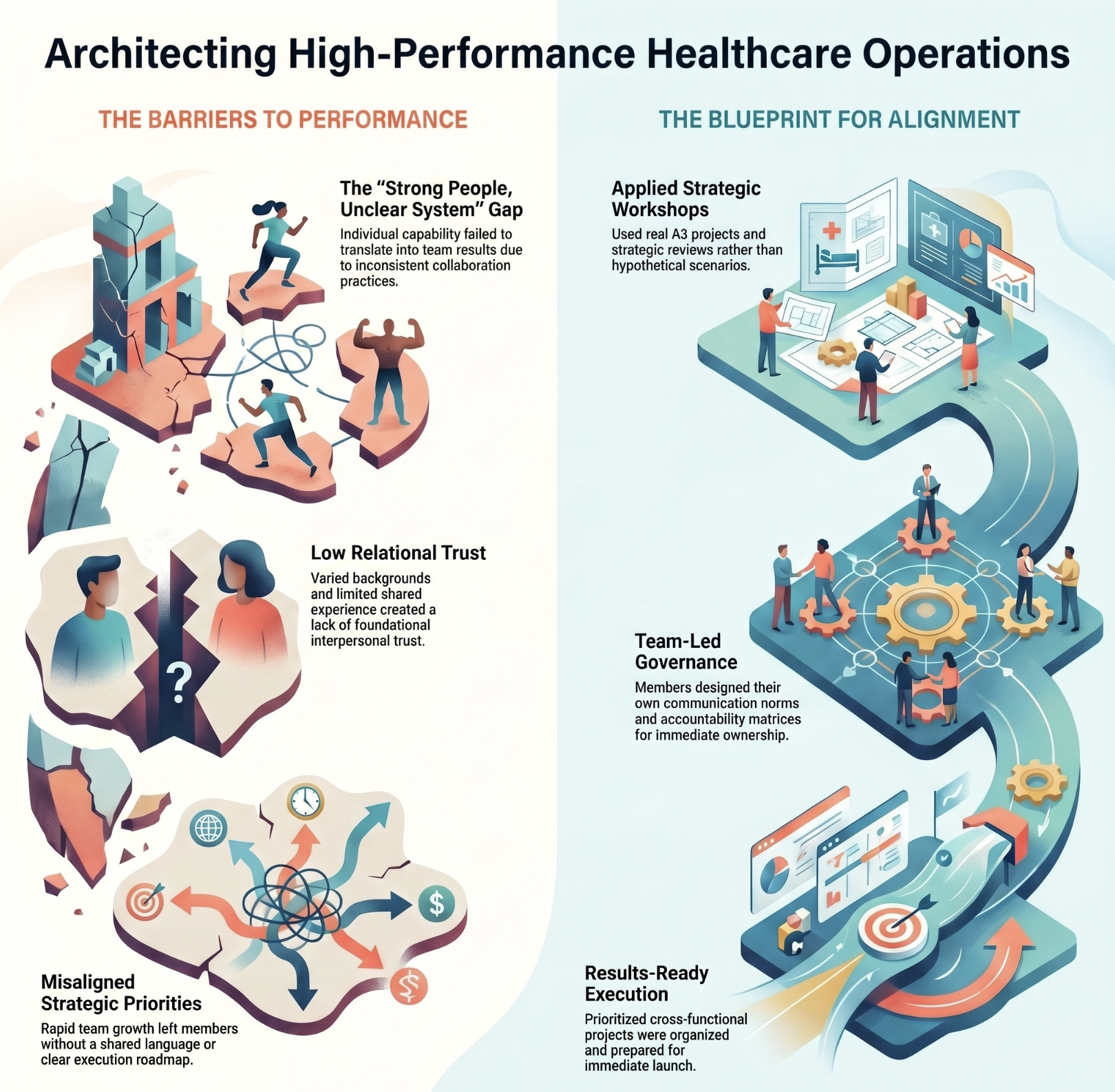
Challenge: A New, Expanding Team in Need of Direction and Alignment
A recently restructured Operational Excellence team within a global healthcare company was tasked with delivering on ambitious strategic objectives. However, the team had recently undergone rapid expansion and brought together members with varied backgrounds and limited shared experience. With unclear priorities, inconsistent collaboration practices, and low relational trust, the team lacked the cohesion needed to drive results across the business.
Solution: Strategic Workshop to Build Team Alignment and Problem-Solving Capacity
To address these challenges, Eli Sharp Consulting (ESC) designed and delivered a two-and-a-half-day off-site workshop aimed at unifying the team around strategic priorities, improving collaboration, and equipping members with practical tools to deliver results.
Key workshop components included:
- Team Development: ESC developed focused sessions to build trust, deepen relationships, and enhance the group’s ability to collaboratively solve problems.
- Strategic Alignment: A comprehensive review of key documents (A3 Projects, the Annual Strategic Review, and Individual Improvement Goals) to ensure alignment with the company’s mission and enterprise-wide goals.
- Project Prioritization: Discussions to review all current projects, identify what to advance or defer, and spotlight cross-functional dependencies.
- Team Building Experience: ESC designed a structured group activity on the second evening to foster connection and reinforce collaboration in a fun, engaging way.
- Collaboration Structures: Creation of a cross-functional collaboration matrix, clearly assigned next steps, and expectations for accountability.
- Communication & Meeting Standards: Development of team-specific norms for meetings, standardized templates, and SharePoint use protocols to support transparency and efficiency.
ESC worked closely with senior leadership to finalize the design and tailor workshop content to the team’s real-time challenges and the company's strategic goals.
Results: A Stronger, More Aligned Team Poised for Strategic Impact
By the conclusion of the workshop, the team had:
- Built foundational trust and rapport among team members
- Reached consensus on key strategic priorities
- Identified and organized top-priority projects for immediate cross-functional execution
- Established clear processes for ongoing collaboration and communication
- Developed a sense of shared ownership for both strategic execution and team culture
This workshop created a cohesive, energized team ready to drive operational excellence and achieve strategic business outcomes.
Challenge: A Need for Practical Tools to Boost Productivity and Problem Solving
A leading medical device company sought to enhance operational efficiency and cultivate a culture of continuous improvement within its transactional functions. While strategic goals were clear, teams lacked a unified approach and practical tools to identify inefficiencies and execute sustainable improvements. Leadership recognized that lean methodologies and Six Sigma training could empower employees to solve problems more effectively—but only if applied through real projects and integrated into everyday work.
Solution: Execute Now! Lean Six Sigma Training Program
Eli Sharp Consulting (ESC) delivered the Execute Now! training program—a hands-on, project-based training experience designed to rapidly build capability in lean, Six Sigma, and blitz methodologies. The training was delivered on-site in Switzerland and tailored to the company’s operational context and strategic goals.
Key components of the program included:
- Participant Selection and Project Alignment: the client identified 20 participants, each paired with an immediate manager and assigned a real improvement project to apply their training in context.
- Co-Delivery Model: ESC partnered with an internal trainer from the company to co-facilitate the program, ensuring knowledge transfer and sustainability.
- Leadership Engagement: The program included direct involvement from site leadership to emphasize strategic alignment and remove potential project barriers.
- Immersive Training Experience: Training was delivered across two separate three-day training courses, spaced one month apart to allow participants time to work on their projects between sessions.
- Custom Tools & Environment: The training leveraged a variety of materials including brown paper, blitz kits, and flexible room setups to foster collaboration and real-time process mapping.
Results: A Team Equipped to Execute Continuous Improvement with Confidence
As a result of the Execute Now! program:
- Participants gained practical, working knowledge of Lean, Six Sigma, and continuous improvement tools
- Teams launched and advanced real-world improvement projects aligned with their company’s strategic goals
- Internal trainers and leadership were empowered to support and sustain the methodology post-training
- The training helped foster a mindset of proactive problem-solving and cross-functional collaboration
The initiative not only built critical skills but also delivered early wins, positioning the European team to drive measurable improvements in productivity and process performance.
Challenge: Identifying Opportunities for Harmonization and Process Improvement Across Multiple Functions
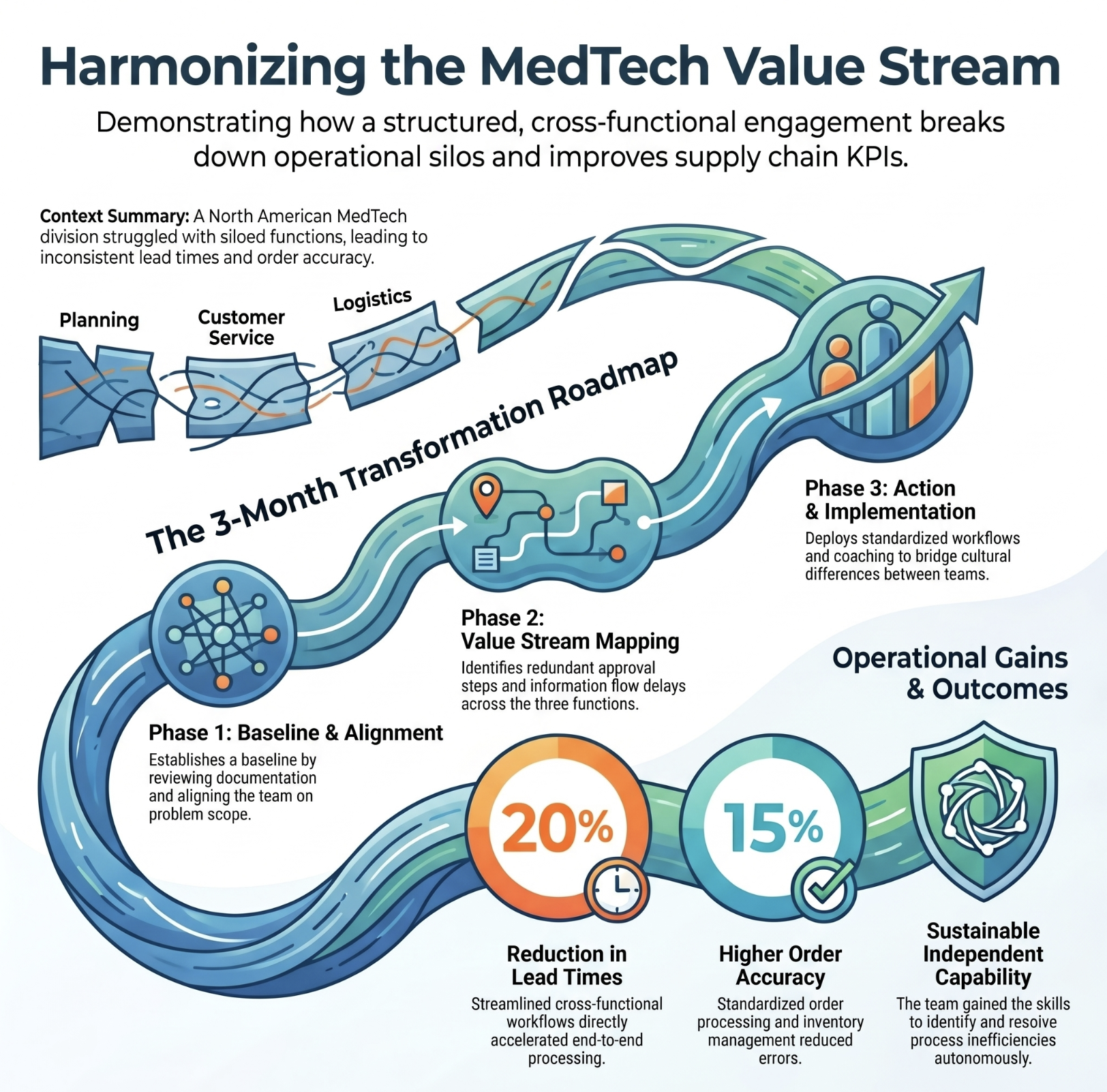
A North American division of a global med tech aimed to streamline its operations by harmonizing processes across Planning, Customer Service and Logistics. With diverse teams working independently and inconsistent processes leading to inefficiencies, leadership sought to implement a cross-functional approach to identify areas for improvement, reduce lead times, and foster greater team cohesion.
Solution: Targeted Continuous Improvement Initiative Led by External Subject Matter Expert
Eli Sharp Consulting (ESC) was engaged to serve as an external Continuous Improvement (CI) expert, guiding the North America Team through a structured improvement initiative. The project aimed to leverage value stream mapping (VSM), data analysis, and process optimization techniques while also focusing on enhancing team dynamics and bridging cultural differences.
The initiative was structured as follows:
Engagement Structure and Scope:
- Duration: Three months.
- Led by: ESC with a Senior Leader from the client, assisted by a Project Manager.
- Participants: Subject matter experts from Planning, Customer Service and Logistics.
- Role of ESC:
- Facilitate workshops and virtual sessions on VSM and process mapping.
- Perform targeted data analysis to identify root causes of process delays and inefficiencies.
- Develop action plans to address identified improvement areas.
- Guide cross-functional teams in quantifying potential process improvements.
- Provide one-on-one coaching to support effective communication and collaboration among team members.
Phase 1 – Initial Assessment and Data Analysis
- Objective: Establish a baseline understanding of current processes, lead times, and existing challenges.
- Methodology:
- Reviewed existing process documentation and relevant KPIs.
- Conducted targeted data analysis to assess lead times, waste points, and areas of process variability.
- Facilitated initial virtual workshop to align team members on project objectives and outline the CI framework.
Results: Identified key areas of process misalignment across Planning, Customer Service and Logistics, with significant variability in lead times and a lack of standardized workflows.
Phase 2 – Value Stream Mapping (VSM) and Root Cause Analysis
- Objective: Develop a comprehensive view of the current state processes, identify waste points, and prioritize areas for improvement.
- Methodology:
- Facilitated a series of VSM workshops to map out end-to-end processes, highlighting areas of redundancy and inefficiency.
- Engaged cross-functional teams in root cause analysis, focusing on delays in information flow, inconsistent communication, and manual handoffs.
- Encouraged open dialogue to address cultural differences and foster collective problem-solving.
Results: VSM revealed multiple areas of opportunity for harmonization, including redundant approval steps in logistics and delays in customer service response times. Action plans were developed to streamline workflows and reduce lead times by 25%.
Phase 3 – Implementation of Process Improvements and Team Effectiveness Coaching
- Objective: Implement targeted process improvements while enhancing team collaboration and communication.
- Methodology:
- Conducted targeted coaching sessions to address cultural differences and improve conflict resolution skills.
- Guided team members in implementing process changes, including standardized workflows for order processing and inventory management.
- Facilitated follow-up workshops to assess progress, refine action plans, and quantify results.
Results: Implementation of new process workflows reduced overall lead time by 20%, improved order accuracy by 15%, and fostered greater cohesion across the team, as evidenced by feedback collected during post-implementation reviews.
Overall Impact and Outcomes:
The targeted engagement successfully delivered the following outcomes:
- Enhanced Process Efficiency: Streamlined processes reduced lead times by 20%, improving customer response times and operational consistency.
- Cross-Functional Collaboration: Improved communication and alignment across Planning, Customer Service and Logistics teams, fostering a more cohesive work environment.
- Data-Driven Decision-Making: Data analysis and VSM provided clear visibility into process inefficiencies, enabling targeted action planning and measurable improvements.
- Sustainable Improvement Framework: ESC’s coaching approach empowered team members to continue measuring their process, identifying and addressing process inefficiencies independently, ensuring lasting impact beyond the engagement period.
By integrating process improvement with targeted team development, ESC delivered a holistic approach that not only addressed operational inefficiencies but also strengthened collaboration and communication across diverse functional areas.
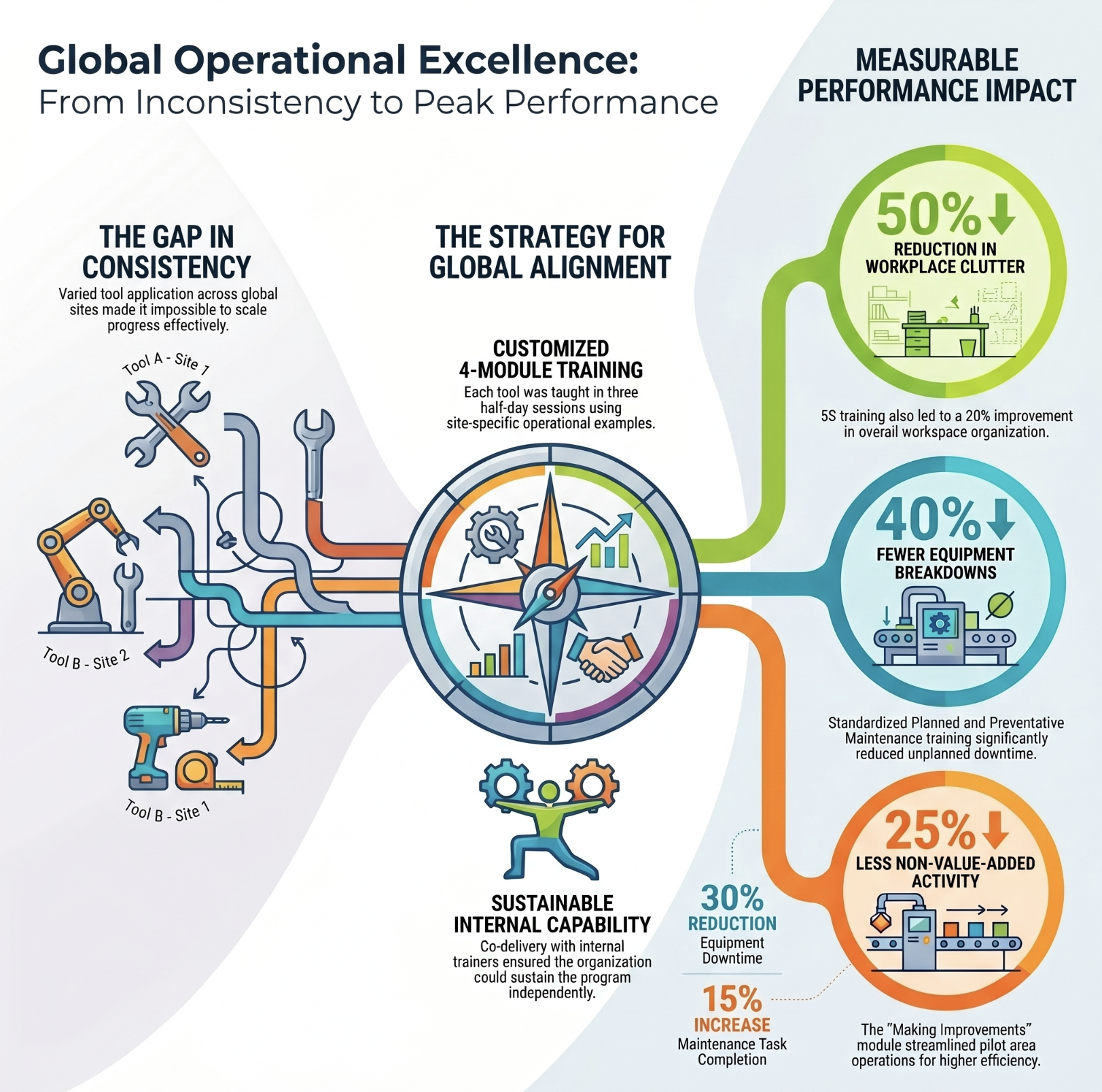
Challenge: Inconsistent Application of Operational Excellence Tools Across Multiple Sites
A global medical device company sought to enhance the implementation of key operational excellence tools across its numerous sites, focusing on improving productivity, reducing waste, and standardizing practices. The company identified four critical areas for training – Making Improvements, Team Maintenance, Planned and Preventative Maintenance, and 5S – but faced inconsistencies in how these tools were understood and applied across teams.
Solution: Comprehensive Training Program for Operational Excellence Implementation
Eli Sharp Consulting (ESC) developed and delivered a four-module training program designed to equip the client with the necessary tools and knowledge to effectively implement Making Improvements, Team Maintenance, Planned and Preventative Maintenance, and 5S practices. The training was structured to maximize engagement, facilitate knowledge transfer, and ensure alignment with the client’s existing operational frameworks.
The project was structured as follows:
Module 1 – Making Improvements Training
- Objective: Equip participants with skills to identify and eliminate waste, reduce process variability, and implement targeted process improvements.
- Structure: Three half-day training sessions, with up to 12 participants per wave.
- Delivery: ESC co-taught the training with a designated internal trainer, ensuring that the client could independently manage training implementation post-delivery.
- Content: Customized slide decks, handouts, and training materials focused on the identification of waste, root cause analysis, and development of improvement plans.
Results: Participants gained practical skills in identifying process inefficiencies and implementing targeted improvements, leading to a 25% reduction in non-value-added activities in pilot areas.
Module 2 – Team Maintenance Training
- Objective: Standardize daily maintenance practices to ensure consistent execution of routine maintenance activities, minimizing downtime.
- Structure: Three half-day training sessions, with up to 12 participants per wave.
- Development: ESC reviewed existing client training materials and collaborated with client teams to design customized content, incorporating site-specific examples and success stories.
- Delivery: Training materials were developed iteratively, with multiple review cycles to align with client’s operational goals.
Results: Implementation of standardized TM practices resulted in a 30% reduction in equipment downtime and a 15% increase in maintenance task completion rates.
Module 3 – Planned and Preventative Maintenance Training
- Objective: Develop a structured approach to planned and preventative maintenance to extend equipment life and prevent unexpected failures.
- Structure: Three half-day training sessions, with up to 12 participants per wave.
- Development: ESC designed training materials focused on proactive maintenance planning, scheduling, and documentation, incorporating real-world client case studies.
- Delivery: Training sessions included interactive exercises and role-playing scenarios to reinforce learning and simulate real-world challenges.
Results: Improved maintenance scheduling reduced unplanned equipment breakdowns by 40%, contributing to overall productivity gains.
Module 4 – 5S Training
- Objective: Implement the 5S methodology to standardize workspaces, improve organization, and promote workplace safety.
- Structure: Three half-day training sessions, with up to 12 participants per wave.
- Development: ESC customized training materials to reflect the client’s operational environments, focusing on practical application and visual management techniques.
- Delivery: Training delivery included hands-on exercises, group discussions, and a structured Q&A session to address specific site challenges.
Results: Post-training audits revealed a 50% reduction in workplace clutter, a 20% improvement in workspace organization, and increased employee engagement in 5S activities.
Overall Impact and Outcomes
The comprehensive training program delivered the following key outcomes:
- Enhanced Operational Consistency: Standardized training content ensured consistent application of operational excellence tools across multiple sites.
- Increased Staff Competency: Participants reported increased confidence in identifying and implementing process improvements, reducing waste, and maintaining equipment.
- Sustained Improvements: The integration of internal trainers enabled the client to sustain training efforts independently, fostering a culture of continuous improvement.
- Quantifiable Results: Operational metrics demonstrated significant reductions in equipment downtime, process variability, and workplace clutter, contributing to overall productivity gains.
By aligning training content with the client’s strategic objectives and leveraging internal trainers for co-delivery, ESC enabled the client to achieve its operational excellence goals while building internal capability for ongoing training delivery and process optimization.
Challenge: Ineffective Customer Complaint Handling Process Creating Delays and Cost Overruns
A global organization recognized significant inefficiencies in its customer complaint handling processes, leading to prolonged response times, inconsistent communication, and elevated operational costs. To address these challenges, leadership sought to transform its complaint handling capability by standardizing complaint handling across all business units, ensuring consistency, enhanced accountability, and a unified organizational structure.
Solution: Comprehensive Transformation Program to Standardize and Streamline Complaint Handling
Eli Sharp Consulting (ESC) developed and facilitated a multi-phase transformation program to redefine the approach to complaint handling across the organization. The initiative was structured to assess the current state, benchmark industry best practices, design a standardized process, and develop the necessary organizational structure and systems requirements for effective implementation.
The project was structured into four key phases:
Phase 1 – Current State Analysis and Benchmarking
- Objective: Assess the existing customer complaint handling processes, benchmark against industry best practices, and explore potential outsourcing options.
- Methodology:
- Conducted a comprehensive data analysis, reviewing key metrics such as turnaround time, complaint volume, and productivity rates.
- Collated industry benchmarking materials and conducted targeted research to identify best practices in complaint handling and potential outsourcing solutions.
- Compiled findings into a summary document to inform subsequent strategy development.
Results: The analysis identified key process inefficiencies, including inconsistent complaint categorization, prolonged response times, and a lack of standardized procedures across business units.
Phase 2 – Strategy Development Working Session
- Objective: Define the high-level strategy for the transformed customer complaint handling process, establishing clear objectives, core competencies, and potential outsourcing parameters.
- Structure: Two-day, in-person working session with 16 leadership representatives from various business units.
- Methodology:
- Reviewed findings from the pre-work analysis to align the leadership team on strategic priorities.
- Facilitated collaborative strategy development, focusing on core competencies to retain in-house and potential areas for outsourcing.
- Established guardrails to define what is feasible within the existing operational framework.
Results: The leadership team aligned on a strategic framework emphasizing process standardization, targeted outsourcing opportunities, and a focus on improving response times by 30%.
Phase 3 – Process Development Working Session
- Objective: Develop a standardized, organization-wide customer complaint handling process based on the strategic framework defined in Phase 2.
- Structure: Three-day, in-person working session with 16 subject matter experts (SMEs) specializing in customer complaints.
- Methodology:
- Detailed process mapping to identify key steps, roles, and responsibilities.
- Created a high-level RACI (Responsible, Accountable, Consulted, Informed) matrix to establish clear accountability across the process.
- Developed a unified process to be piloted and rolled out across all business units.
Results: The newly designed process reduced handoff points by 40% and established clear roles for complaint intake, resolution, and escalation, contributing to a projected 25% reduction in complaint resolution time.
Phase 4 – Organizational and Systems Development Working Session
- Objective: Define the organizational structure and systems requirements to support the newly developed complaint handling process.
- Structure: Three-day, in-person working session with the same SME team from Phase 3.
- Methodology:
- Organizational development focused on identifying key roles, reporting structures, and required competencies for effective process implementation.
- Systems development to define high-level requirements for complaint tracking, performance measurement, and automated reporting.
- Determined whether existing systems could be leveraged or if new systems were necessary to meet strategic objectives.
Results: The final organizational structure aligned resources under a centralized complaints management unit, supported by a comprehensive systems framework to enhance data visibility and streamline reporting.
Overall Impact and Outcomes
The multi-phase transformation program delivered the following key outcomes:
- Standardized Complaint Handling Process: The unified process reduced response time by 30% and minimized process variability across business units.
- Enhanced Organizational Structure: A centralized complaints management unit was established, supported by clear reporting lines and standardized roles.
- Improved Process Efficiency: The elimination of redundant steps and the integration of a RACI matrix reduced handoff points by 40%, contributing to faster resolution times.
- Data-Driven Decision-Making: Enhanced data visibility through newly defined systems requirements provided leadership with actionable insights into complaint handling performance and areas for further improvement.
- Cost Reduction: Streamlined processes and targeted outsourcing opportunities led to a projected cost reduction of 20% across the complaint handling function.
By engaging leadership, SMEs, and key stakeholders in the design and implementation of the new approach, ESC successfully delivered a comprehensive strategy that not only improved process efficiency but also positioned the organization for sustained operational excellence in customer complaint handling.
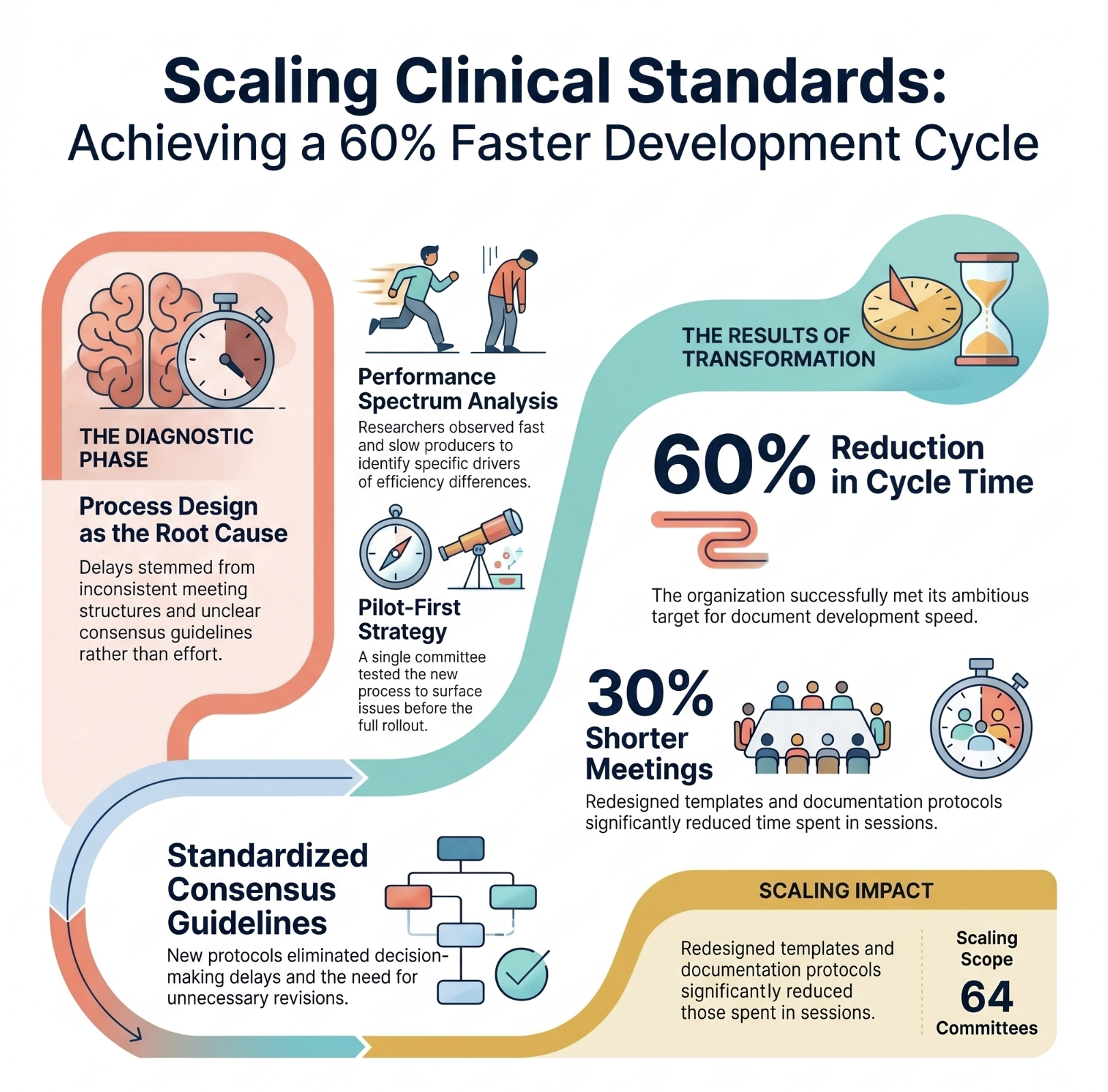
Challenge: Excessive Turnaround Time in Document Development Limiting Operational Efficiency
A clinical standards organization faced significant challenges in its document development process despite previous improvement efforts, and now sought to reduce the turnaround time by 60%. This ambitious target required comprehensive data gathering, process redesign, and targeted pilot implementation to achieve sustainable improvements across 64 Document Development Committees (DDCs).
Solution: Comprehensive Process Redesign and Targeted Pilot Implementation
Eli Sharp Consulting (ESC) led a multi-phase initiative to analyze, redesign, and pilot a streamlined document development process. The objective was to achieve a 60% reduction in turnaround time while maintaining quality and consensus in the document review and approval processes.
The project was structured into five key phases:
1. Define the Problem (Data Collection and Analysis)
- Objective: Identify key bottlenecks and inefficiencies within the existing document development process.
- Methodology:
- Conducted 30–45 minute focus group sessions with selected DDCs. Groups were strategically selected from rapid producers, middle performers, and slower producers to ensure comprehensive data representation.
- Observed six DDC group meetings for one hour each to assess group dynamics and identify specific process bottlenecks and communication gaps.
- Deliverables: A comprehensive report detailing identified pain points, process inefficiencies, and areas for immediate attention.
2. Understand Current State and Develop Future State Process
- Objective: Design a future state document development process to achieve the targeted turnaround time.
- Methodology:
- Conducted multiple virtual work sessions, engaging a cross-functional team of 12 members from different DDCs.
- The team included representatives from rapid, middle, and slow-performing DDCs to provide diverse perspectives.
- Process mapping, root cause analysis, and consensus-building exercises were facilitated to identify quick wins and longer-term process changes.
- Developed a detailed action plan with specific recommendations for process standardization, meeting structure optimization, and documentation management.
3. Pilot Future State Process
- Objective: Validate the future state process through targeted pilot testing with selected DDCs.
- Methodology:
- The client selected one DDC group to serve as the pilot for the new process, with the blitz team leader acting as the pilot group leader.
- The pilot group implemented the new document development process from start to finish, documenting any process snags or execution challenges.
- ESC provided remote support throughout the pilot phase, addressing emerging issues and refining the action plan based on pilot feedback.
4. Refine Future State Process
- Objective: Analyze pilot feedback and refine the process for broader roll-out.
- Methodology:
- Conducted follow-up virtual work sessions with the original team, focusing on evaluating pilot results, resolving identified issues, and finalizing the roll-out plan.
- Developed specific communication strategies to ensure consistent messaging and adoption of the new process across all DDCs.
5. Roll Out Future Document Development Process (Organization-Wide Implementation)
- Objective: Implement the optimized document development process across all DDCs.
- Methodology:
- ESC supported the team remotely as they rolled out the new process to all 64 DDCs, ensuring consistent training and communication.
- Provided targeted guidance on implementation challenges and reinforced process changes to mitigate resistance and maintain adherence to the new framework.
Results: Achieved Targeted Turnaround Time and Enhanced Process Consistency
The multi-phase initiative delivered the following outcomes:
- Reduced Turnaround Time: Document development cycle time was reduced by 60%.
- Standardized Meeting Structures: Re-designed meeting templates and documentation protocols streamlined meeting discussions, reducing average meeting duration by 30%.
- Improved Accountability and Consensus: Implementation of standardized consensus guidelines minimized decision-making delays, preventing unnecessary document revisions.
- Pilot Validation and Scalable Roll-Out: Pilot testing provided critical insights that enabled targeted process refinements, ensuring a smoother organization-wide roll-out.
- Sustainable Continuous Improvement Framework: ESC provided ongoing remote support to monitor progress, resolve emerging issues, and further refine processes as needed.
The structured approach not only achieved the ambitious target but also fostered a culture of continuous improvement and process discipline across all DDCs, positioning the client for ongoing operational excellence.
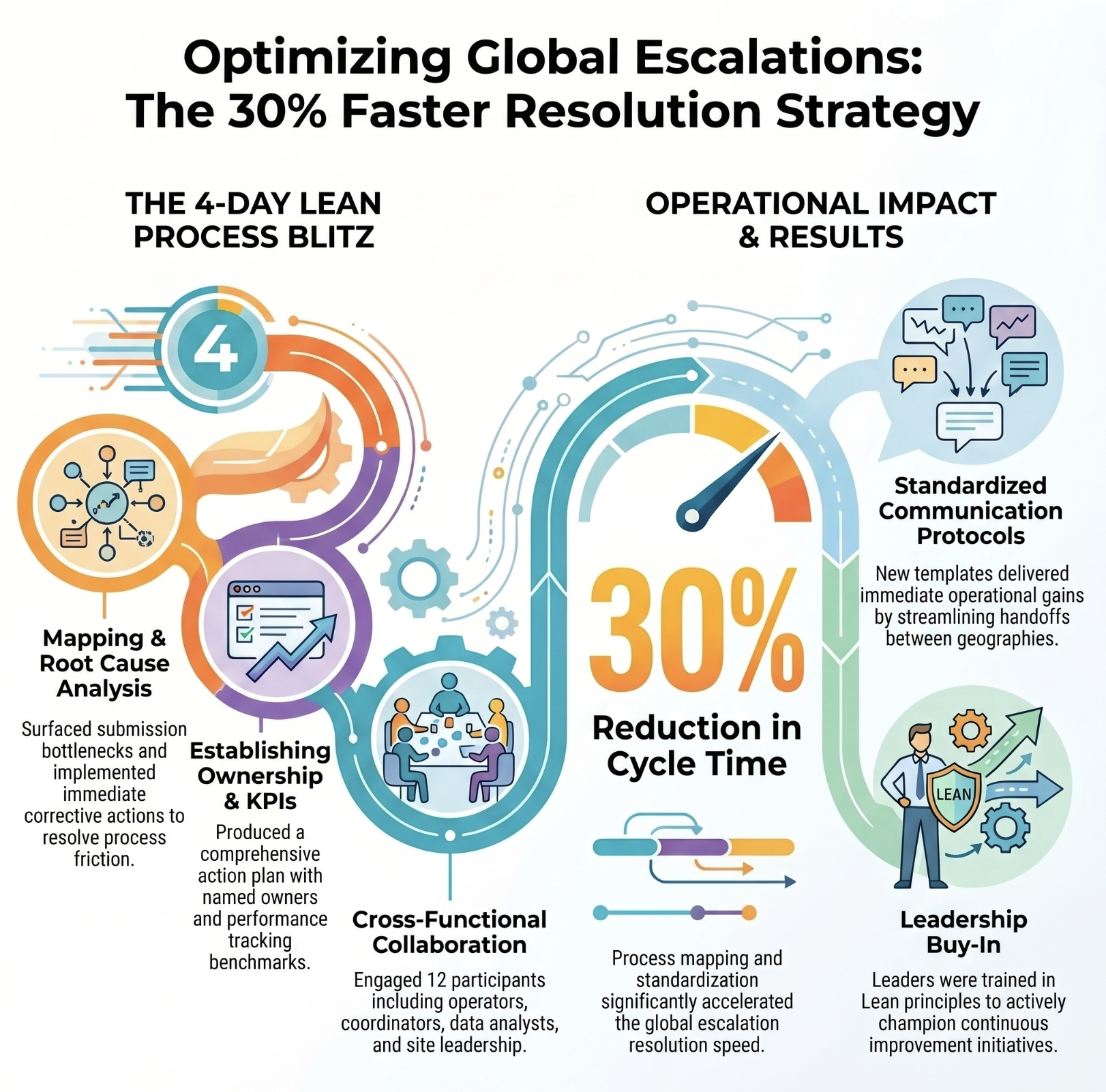
Challenge: Inefficient Escalation Processes Creating Delays and Bottlenecks
A global contact lens manufacturer identified inefficiencies in its global escalation process, leading to delays, communication breakdowns, and inconsistent resolution timelines. These issues not only hindered operational efficiency but also posed risks to customer satisfaction and regulatory compliance. Leadership recognized the need for targeted process improvement to streamline workflows, standardize escalation procedures, and enhance overall operational effectiveness.
Solution: Lean Training and Process Blitz to Optimize Global Escalation Process
Eli Sharp Consulting (ESC) delivered a two-step intervention consisting of Lean Overview Training for site leadership followed by a four-day Lean Process Blitz focused on the global escalation process. The objective was to align leadership on continuous improvement principles, identify process inefficiencies, and implement quick wins for immediate impact.
The project was structured as follows:
- Step 1: Lean Overview Training for Leadership
- ESC conducted a comprehensive training session for the site Leadership team, introducing Lean, Six Sigma, and blitz methodologies.
- The training covered the benefits of rapid process improvement, strategies for implementing continuous improvement, and real-world success stories to illustrate potential outcomes.
- An extended Q&A session ensured alignment and addressed concerns, preparing leaders to actively support the upcoming blitz event.
- Step 2: Lean Process Blitz Execution
- A four-day Lean Blitz event was held at the client’s site, involving a cross-functional team of 12 participants, including process operators, escalation coordinators, and data analysts.
- Day 1: Kick-off session, review of current state escalation process, and identification of process bottlenecks and pain points.
- Days 2–3: Process mapping, root cause analysis, and implementation of immediate corrective actions.
- Day 4: Finalization of a comprehensive action plan, presentation of findings to site leadership, and assignment of responsibilities for post-blitz implementation.
- Action Plan and Monitoring: The blitz event produced a detailed action plan outlining remaining improvement actions, prioritized by impact and feasibility. The plan included specific recommendations for standardizing escalation workflows, enhancing communication protocols, and establishing key performance indicators (KPIs) to measure progress.
Results: Aligned Leadership and Improved Escalation Workflows
The Lean Training and Process Blitz delivered the following outcomes:
- Streamlined Escalation Process: Process mapping and standardization efforts reduced escalation cycle time by 30%.
- Increased Process Visibility: New KPIs provided clear benchmarks for tracking escalation performance and identifying further improvement opportunities.
- Quick Wins Implemented: Immediate process changes, such as standardized escalation templates and enhanced communication protocols, provided quick operational gains.
- Leadership Alignment: The Lean Training session equipped leadership with the knowledge and tools to champion ongoing continuous improvement efforts.
By integrating Lean Training with a focused Process Blitz, ESC enabled the client to not only address immediate process inefficiencies but also lay the groundwork for sustained process optimization and operational excellence.
Challenge: Inefficient Business Development and Workflow Processes Hindering Growth
A creative production company faced inefficiencies in its business development and workflow processes, resulting in delays, miscommunication, and missed opportunities. Leadership identified the need to streamline processes, improve workflow transparency, and establish measurable performance benchmarks to drive greater operational efficiency and align with growth objectives.
Solution: Lean Blitz to Optimize Business Development and Workflow Processes
Eli Sharp Consulting (ESC) facilitated a three-day Lean Blitz Event focused on the business development and workflow processes. The objective was to identify immediate improvement opportunities, implement quick wins, and create a comprehensive action plan for long-term process optimization.
The project was structured as follows:
- Pre-Blitz Preparation: ESC worked with the client to gather existing process documentation, develop a project charter, and align the scope with strategic objectives. Preparation included:
- Collecting current state process maps and identifying key pain points
- Assembling a cross-functional team of subject matter experts (SMEs) familiar with both business development and workflow processes
- Scheduling all necessary sessions and preparing communication materials for participants
- Blitz Execution: Over the course of three days, the team engaged in intensive sessions focused on process mapping, root cause analysis, and implementation planning:
- Day 1: Kick-off session, review of current processes, and identification of bottlenecks and workflow inefficiencies
- Day 2: Process mapping and identification of quick wins for immediate action
- Day 3: Implementation planning, action plan development, and presentation of findings to leadership
- Action Plan Development: The team developed a detailed action plan outlining next steps for implementing identified improvements, with a focus on mid-term and long-term process optimization.
Results: Improved Workflow Visibility and Business Development Efficiency
The Lean Blitz delivered the following outcomes:
- Streamlined Business Development Processes: Clear workflows reduced handoff delays and streamlined project initiation processes, resulting in a 30% reduction in lead time.
- Improved Workflow Visibility: Enhanced documentation and process mapping provided clarity on key touchpoints and dependencies, minimizing communication gaps.
- Quick Wins Implemented: Immediate actions, such as standardized task tracking and enhanced communication protocols, provided quick operational gains.
- Sustainable Action Plan: A comprehensive plan for ongoing monitoring and follow-up ensured continued progress against identified improvement areas.
By employing a focused Lean Blitz approach, ESC enabled the client to not only address immediate workflow inefficiencies but also establish a framework for continuous improvement and sustainable operational excellence.
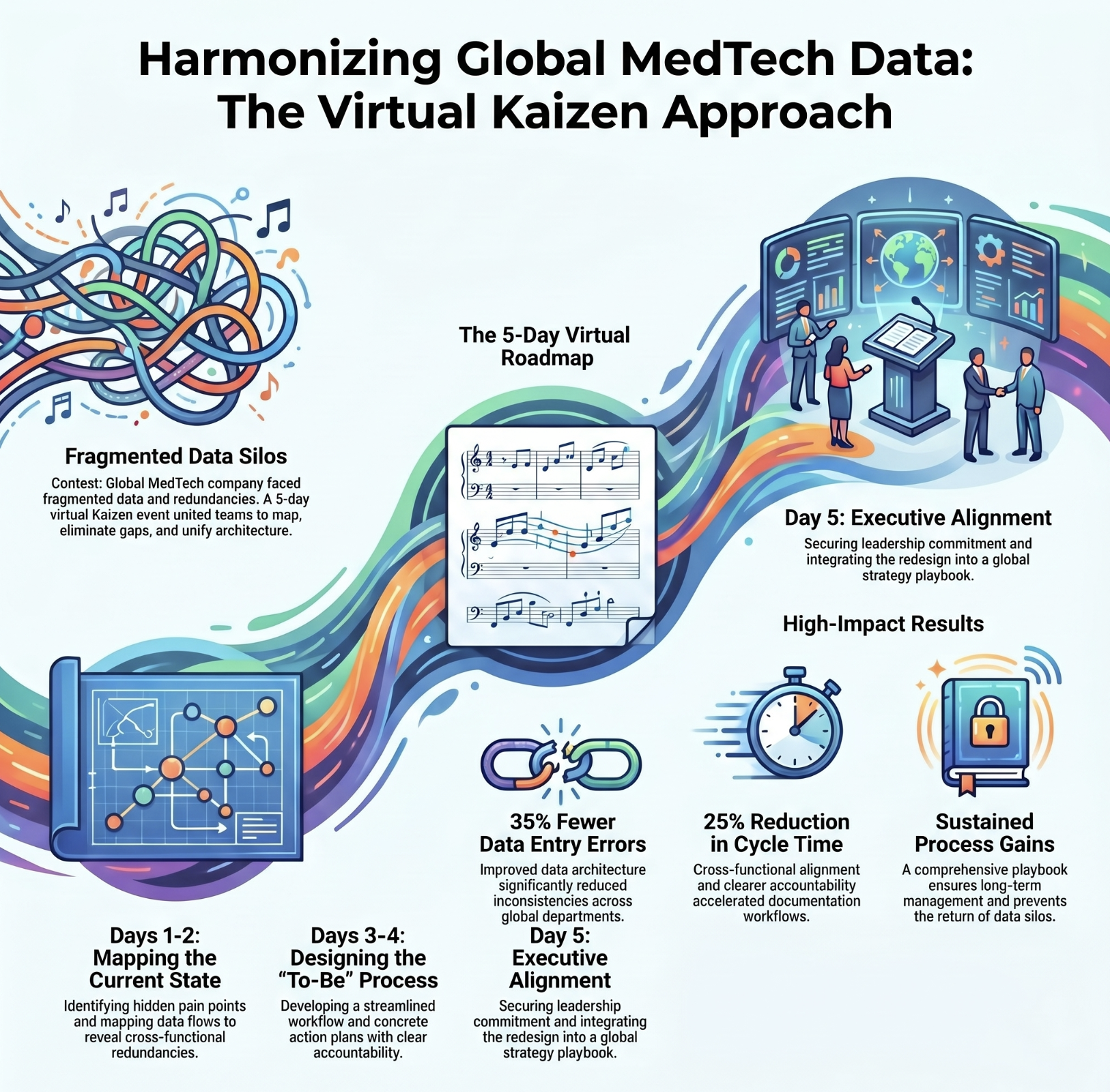
Challenge: Fragmented Product Data Processes Impacting Consistency and Efficiency
A global medical technology company identified significant inconsistencies and redundancies in its product data management processes, leading to workflow inefficiencies, data silos, and inconsistent documentation practices. As part of a broader strategy, leadership sought to harmonize and streamline these processes across multiple functions to enhance operational efficiency and data integrity.
Solution: Virtual Kaizen Event to Align Product Data Processes
Eli Sharp Consulting (ESC) facilitated a 5-day virtual Kaizen event with follow-up support, focusing on the Manage Product Data processes for the organization. The initiative aimed to streamline data management workflows, harmonize documentation practices, and implement Lean Six Sigma methodologies to eliminate waste and drive process consistency.
The project was structured as follows:
- Pre-Event Preparation: Prior to the event, ESC worked with the designated workstream project manager to define the scope, gather existing process documentation, and develop a detailed project charter. Pre-work included:
- Collection of current state process maps, data architecture, and performance metrics
- Identification of process users, subject matter experts (SMEs), and key stakeholders
- Scheduling of all virtual meetings and preparation of communication materials
- Kaizen Event Execution: The five-day Kaizen event was delivered virtually and focused on identifying process inefficiencies, aligning workflows, and establishing a unified data management strategy. The event was structured as follows:
- Day 1: Kick-off session, review of current state processes, and identification of pain points
- Day 2: Process mapping and data flow analysis to pinpoint redundancies and gaps
- Day 3: Development of a To-Be process map and identification of quick wins
- Day 4: Implementation planning, action plan development, and assignment of roles and responsibilities
- Day 5: Executive stakeholder presentation, alignment on next steps, and finalization of the action plan
- Knowledge Transfer and Playbook Development: The fourth phase focused on integrating the results of the Kaizen event into the overall strategy playbook to ensure long-term sustainability and knowledge transfer to internal teams.
- Post-Kaizen Support: ESC provided ongoing remote support to monitor progress, assist with action plan execution, and address emerging issues as the team worked to complete post-Kaizen actions.
Results: Streamlined Processes and Harmonized Data Management Framework
The complete engagement delivered the following outcomes:
- Standardized Data Management Process: Unified workflows reduced data inconsistencies and streamlined documentation practices across departments.
- Increased Data Accuracy: Data architecture improvements led to a 35% reduction in data entry errors.
- Enhanced Collaboration: Cross-functional alignment fostered better communication and accountability, reducing cycle time by 25%.
- Actionable Playbook: A comprehensive playbook was developed to guide ongoing process management and align data practices with broader strategic objectives.
The initiative not only delivered immediate process improvements but also positioned the client to maintain and scale these efficiencies across the organization through structured follow-up and ongoing monitoring.
Challenge: Inefficiencies in Critical Processes Across Multiple Sites
A leading medical organization identified process inefficiencies affecting productivity and operational flow at two key locations. The need to streamline workflows, reduce waste, and implement sustainable improvements was critical to maintaining operational excellence and meeting production targets. However, with multiple processes in need of review, a focused, tactical approach was necessary to deliver rapid yet lasting results.
Solution: Lean Blitz Events to Target Specific Process Improvements
Eli Sharp Consulting (ESC) facilitated a series of Lean Blitz Events at two locations aimed at driving rapid process improvements through targeted Kaizen methodologies. The blitz events were structured to provide immediate action, detailed process mapping, and post-blitz follow-up to ensure sustained progress.
The project was structured as follows:
- Preparation and Pre-Work: Prior to each blitz event, ESC worked with site leadership to define the scope of each event, develop comprehensive charters, and gather existing process documentation. Detailed process maps were requested to serve as baselines for analysis.
- Team Selection and Alignment: A hand-picked team of 12 participants, including key process operators, suppliers, and customers, was assembled for each blitz. The team was led by a designated Blitz Team Leader whose primary responsibility was to drive post-blitz actions to completion.
- Blitz Execution: Each blitz event ranged from three to four days, depending on process complexity, and was structured as follows:
- Day 1: Opening session with site leadership, process overview, and initial process mapping
- Day 2–3: Identifying waste, bottlenecks, and opportunities for immediate action
- Day 4: Implementation of quick wins, action planning for mid- and long-term improvements, and closing session with leadership
- Leadership Support and Accountability: Leadership presence at opening and closing sessions ensured alignment, provided visibility, and empowered the team to remove barriers identified during the blitz.
- Post-Blitz Remote Consulting: ESC provided ongoing support remotely to help teams track progress against action plans, resolve emerging issues, and identify further improvement opportunities.
Results: Immediate Impact and Long-Term Improvement Roadmaps
The Lean Blitz events delivered the following outcomes:
- Streamlined processes with immediate waste reduction and efficiency gains
- Detailed action plans for mid-term and long-term process optimization
- Increased alignment and accountability among process operators, suppliers, and leadership
- Enhanced problem-solving capabilities among team members, fostering a culture of continuous improvement
- A framework for ongoing monitoring and assessment to track progress against established benchmarks
Through the blitz approach, ESC enabled the client to achieve rapid, targeted process improvements while establishing a sustainable roadmap for continued operational excellence.
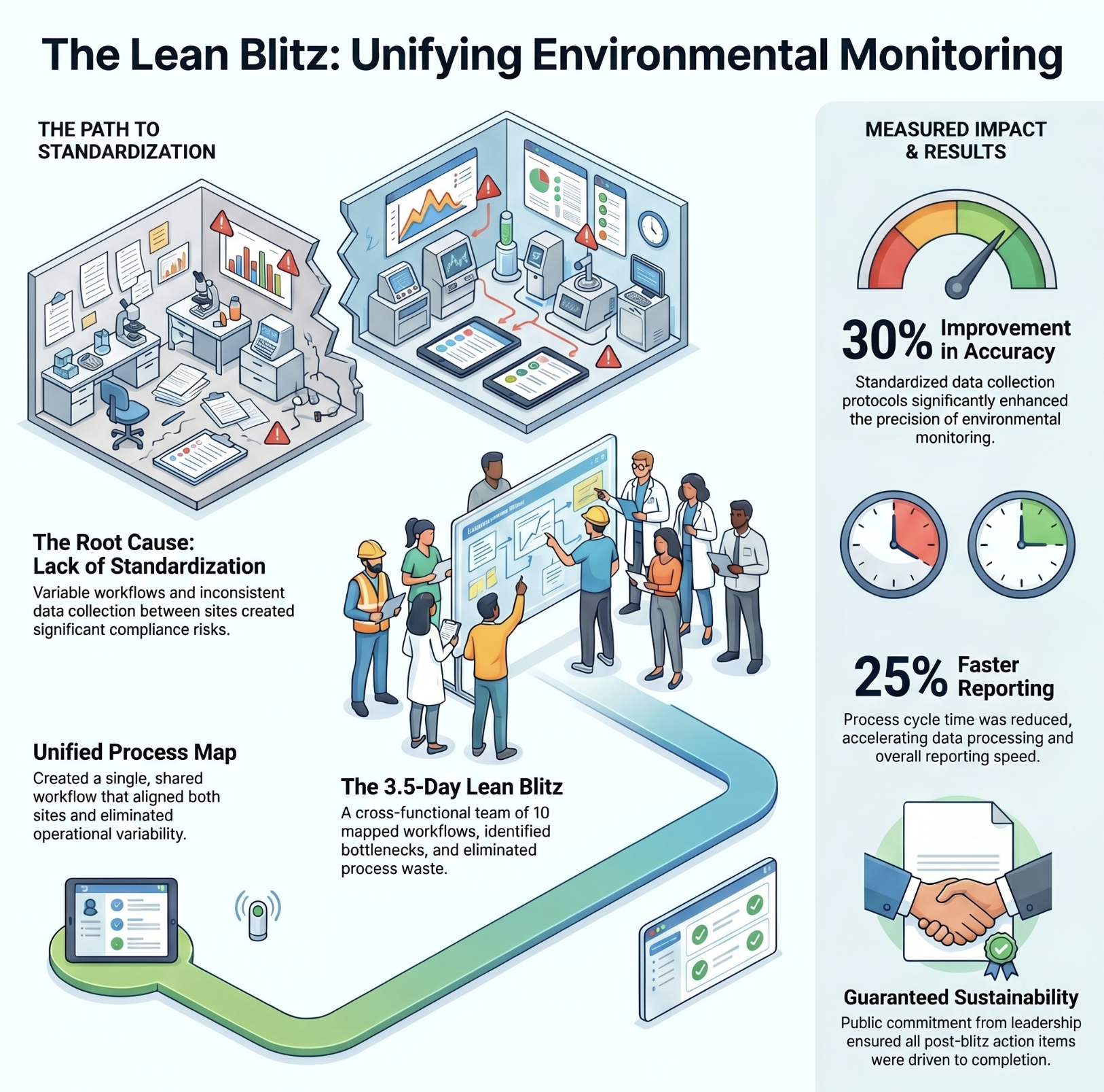
Challenge: Environmental Monitoring Gaps Leading to Operational Delays and Inconsistencies
A medical organization operating across multiple sites identified inconsistencies in its Environmental Monitoring (EM) processes, resulting in data collection delays, inefficient workflows, and potential compliance risks. To address these issues, leadership sought a focused, tactical approach to streamline EM workflows, improve data accuracy, and standardize processes across its two locations.
Solution: Lean Blitz to Optimize Environmental Monitoring Workflows
Eli Sharp Consulting (ESC) facilitated a three and a half day Lean Blitz Event focused on refining the Environmental Monitoring process across both locations. The objective was to deliver immediate process improvements, establish a standardized workflow, and implement measurable metrics for ongoing monitoring and performance tracking.
The project was structured as follows:
- Pre-Blitz Preparation: Prior to the event, ESC collaborated with site leadership to define the scope of the blitz, gather existing process documentation, and develop comprehensive process maps for the EM workflows. A project charter was created to outline objectives, desired outcomes, and roles and responsibilities.
- Blitz Execution: The blitz was structured over three and a half days, engaging a cross-functional team of 10 participants, including process operators, data analysts, and quality assurance representatives. Key activities included:
- Day 1: Process overview, team alignment, and initial process mapping to identify existing workflow bottlenecks.
- Days 2–3: Identifying and eliminating waste, implementing quick wins, and standardizing data collection protocols.
- Day 4: Finalizing the action plan, documenting remaining improvement opportunities, and presenting findings to site leadership.
- Leadership Engagement: Site leadership was involved in both the opening and closing sessions to reinforce the importance of the EM process, ensure alignment, and secure commitment to support ongoing improvements.
- Remote Follow-Up Support: ESC provided remote consulting to monitor progress, assist with action plan execution, and resolve emerging issues throughout the project’s implementation phase.
Results: Standardized EM Process and Sustainable Process Improvements
The Lean Blitz delivered immediate and long-term benefits, including:
- Standardized EM Process: A unified process map was developed to align EM workflows across both locations, reducing variability and ensuring consistent data collection practices.
- Improved Data Accuracy: Enhanced data collection protocols reduced data entry errors and improved monitoring accuracy by 30%.
- Faster Turnaround Times: Workflow streamlining reduced process cycle time by 25%, accelerating data processing and reporting.
- Actionable Improvement Plan: A comprehensive action plan outlined mid-term and long-term improvement initiatives, including opportunities for further training and cross-site collaboration.
The Lean Blitz not only addressed immediate workflow inefficiencies but also positioned the EM team to maintain sustainable improvements through ongoing monitoring and leadership support.
Challenge: Inefficient File Management Processes Causing Delays and Bottlenecks
A medical organization’s Quality Assurance (QA) department faced significant inefficiencies in its file room processes, resulting in misplaced documents, slow retrieval times, and inconsistent filing methods. These inefficiencies not only affected day-to-day operations but also posed risks to regulatory compliance. Leadership identified the need for a focused, tactical approach to streamline processes, reduce waste, and enhance operational efficiency.
Solution: Lean Blitz to Optimize QA File Room Workflows
Eli Sharp Consulting (ESC) facilitated a three and a half day Lean Blitz Event focused on improving the QA File Room processes at the client site. The objective was to provide immediate process improvements, implement a standardized workflow, and establish measurable metrics for ongoing progress tracking.
Key components of the blitz included:
- Pre-Blitz Preparation: ESC collaborated with site leadership to define the event’s scope, assemble the cross-functional blitz team, and gather all existing process documentation and maps. A comprehensive project charter was developed to outline objectives, desired outcomes, and key responsibilities.
- Blitz Execution: Over the course of three and a half days, the selected team of 9 participants worked collaboratively to:
- Map Current State Processes: Identified bottlenecks, redundancies, and workflow inconsistencies in the existing file room processes.
- Analyze Pain Points: Assessed document retrieval times, filing accuracy, and overall organization to pinpoint key areas for improvement.
- Implement Quick Wins: Initiated immediate corrective actions, including reorganizing file structures, labeling systems, and documentation tracking methods.
- Develop Action Plan: Created a comprehensive action plan for longer-term improvements, including recommendations for digital filing solutions and standard operating procedures (SOPs).
- Leadership Alignment: ESC facilitated opening and closing sessions with the site leadership team to ensure buy-in, provide visibility into proposed changes, and secure ongoing support for implementing post-blitz actions.
Results: Immediate Gains and Long-Term Process Optimization
Following the Lean Blitz event, the QA File Room team achieved the following outcomes:
- Improved File Retrieval Time: Document retrieval times were reduced by 40% through standardized file labeling and organizational methods.
- Increased Filing Accuracy: Implementation of SOPs minimized misplaced files and filing errors.
- Enhanced Workflow Visibility: The creation of updated process maps provided a clear visual representation of the workflow, allowing for easier identification of potential issues.
- Sustainable Action Plan: A detailed action plan outlined additional improvement opportunities, with ongoing follow-up support provided by ESC to monitor progress and resolve emerging issues.
By employing a structured Lean Blitz approach, the client not only addressed immediate inefficiencies but also established a framework for continued process improvement, fostering a culture of operational excellence within the QA department.
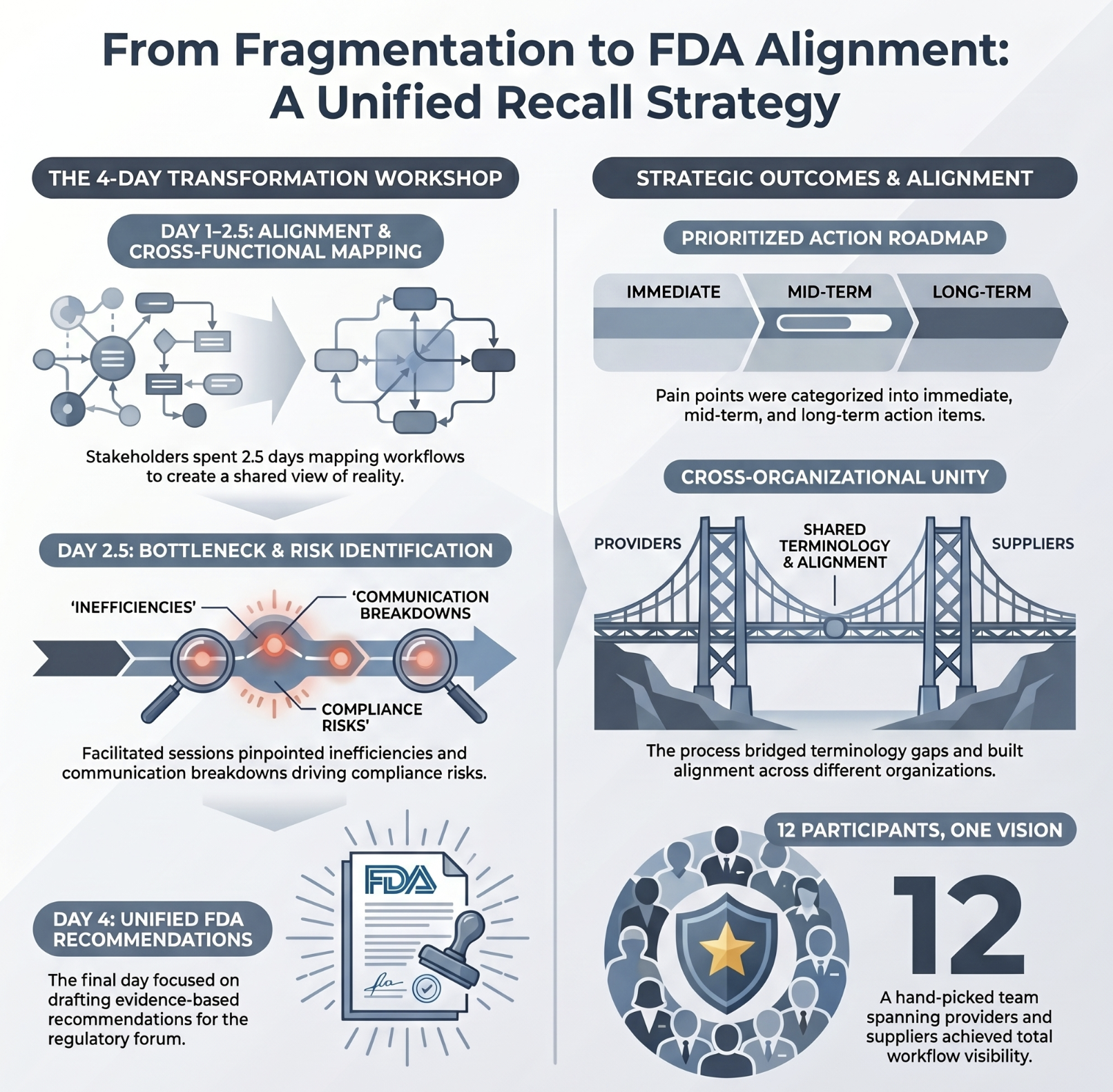
Challenge: Fragmented Recall Processes Causing Delays and Inefficiencies
A consortium of healthcare providers and suppliers recognized inconsistencies and bottlenecks in their recall processes, leading to delays, miscommunication, and potential compliance risks. With increasing regulatory scrutiny from the FDA, the group sought to streamline recall processes, identify pain points, and develop unified recommendations to present to regulatory stakeholders.
Solution: Process Mapping Workshop to Identify Gaps and Align Strategies
Eli Sharp Consulting (ESC) facilitated a comprehensive four-day process mapping activity in Chicago to uncover inefficiencies in the recall processes for both providers and suppliers. The goal was to establish a clear current state process map, identify critical pain points, and formulate actionable recommendations for improvement.
The approach included:
- Preparation and Agenda Review: The first day involved a leadership review to align expectations, clarify desired outcomes, and finalize the mapping agenda.
- Cross-Functional Mapping Session: A diverse, hand-picked team of 12 participants, including both providers and suppliers, engaged in two and a half days of intensive process mapping. This collaborative approach fostered a deeper understanding of each party’s process flow, challenges, and dependencies.
- Identifying Pain Points and Improvement Opportunities: ESC led facilitated sessions to pinpoint inefficiencies, communication breakdowns, and bottlenecks in the current recall processes. These issues were prioritized for immediate, mid-term, and long-term resolution.
- Unified Recommendations: The final half-day focused on drafting key recommendations for presentation to the FDA, aligned with broader strategic initiatives aimed at regulatory compliance and operational efficiency.
Results: Data-Driven Recommendations for Process Improvement and FDA Presentation
By the conclusion of the mapping event, the consortium achieved the following outcomes:
- Comprehensive, visualized process maps for the current state of recall processes, with clarity on provider and supplier workflows
- Identification of critical pain points impacting recall efficiency and compliance
- A prioritized set of improvement actions for short-term and long-term implementation
- A clear, structured communication plan for presenting findings and recommendations to the FDA at the upcoming Spring Forum
The mapping activity not only fostered alignment among stakeholders but also provided the foundation for ongoing process optimization and potential regulatory advocacy.
Challenge: Inconsistent Medical Device Reporting (MDR) Process Causing Regulatory Delays
A global med tech company identified critical gaps in its Medical Device Reporting (MDR) process, leading to late submissions to the FDA and potential compliance risks. Leadership sought a structured, data-driven approach to address inefficiencies, streamline reporting, and establish a robust framework for sustainable process improvement.
Solution: Lean Six Sigma Blitz to Standardize and Optimize MDR Reporting
Eli Sharp Consulting (ESC) facilitated a four-day Lean Six Sigma Blitz aimed at transforming the MDR process and achieving zero late reports to the FDA. The project was structured to not only resolve immediate inefficiencies but also to establish objective metrics for ongoing performance evaluation.
Key components of the engagement included:
- Pre-Blitz Preparation: ESC worked with the client to gather comprehensive current state documentation, including process maps, operational data, and existing performance metrics. This pre-work informed the blitz agenda and areas of focus.
- Blitz Team Selection: A cross-functional team was assembled, comprising key process users, subject matter experts (SMEs), and representatives from related departments to ensure comprehensive coverage of the process.
- Four-Day Lean Six Sigma Blitz:
- Day 1: Current State Analysis – The team reviewed current processes, identified pain points, and mapped workflows to pinpoint sources of delay.
- Day 2: Process Redesign – Participants collaborated to design a To-Be process aimed at eliminating MDR reporting delays while maintaining FDA and CAPA compliance.
- Day 3: Action Planning – Immediate corrective actions were implemented during the blitz, while longer-term actions were mapped out for post-blitz follow-up.
- Day 4: Stakeholder Review – ESC led a closing session with executive stakeholders to present the redesigned MDR process and gain commitment to drive post-blitz actions to completion.
- Post-Blitz Support: ESC provided ongoing remote consulting to monitor progress, assist with problem-solving, and recommend additional targeted improvement projects as needed.
Results: A Streamlined, Compliant MDR Reporting Process
Following the Lean Six Sigma Blitz:
- The client established a zero late report benchmark for MDR submissions to the FDA.
- A global To-Be process was developed, documented, and implemented to address FDA and CAPA requirements.
- Action plans were created to drive remaining process improvements post-blitz.
- The cross-functional team was equipped with clear roles and responsibilities for maintaining process consistency and preventing future delays.
By aligning leadership and process owners around a unified strategy, the blitz not only delivered immediate results but also laid the foundation for ongoing operational excellence and regulatory compliance.